


When temperatures drop and your trees enter their dormant phase, it’s the perfect time to take care of some important maintenance: pruning your trees. Pruning during the colder months not only improves the structure and health of your trees but also prepares them for vigorous growth in spring. With the right tools, timing, and care, you can ensure your landscape stays strong and beautiful year after year.
Here’s how to make the most of the winter pruning season and keep your trees thriving.
Benefits of Pruning Trees During Winter Dormancy
Winter is an ideal time to prune for several reasons. When trees are dormant, their energy is conserved, and the absence of leaves allows for better visibility of the branch structure. This makes it easier to identify weak, crossing, or damaged limbs that need removal.
Another advantage of pruning fruit trees in winter is improved fruit production. By removing overcrowded branches and allowing more sunlight and airflow into the canopy, you encourage healthier blossoms and better-quality fruit in the growing season.
Additionally, pruning during dormancy reduces the risk of disease. Many fungi, bacteria, and pests that infect pruning wounds are inactive during winter, allowing cuts to heal cleanly before the growing season begins. This proactive care supports stronger trees and minimizes future maintenance needs.
Tools and Safety Measures for Winter Pruning
Proper tools and techniques are key to safe and effective pruning. Since winter weather can make branches brittle and icy, using sharp, clean tools helps ensure smooth cuts and reduces damage to bark.
Before starting, gather essential equipment:
- Hand pruners: For small twigs and branches under 1 inch thick.
- Loppers: For thicker branches up to 2 inches in diameter.
- Pruning saw: For larger limbs that can’t be handled with loppers.
- Gloves and safety gear: Protect your hands and eyes from sharp edges and falling debris.
- Stable ladder: If working on taller trees, make sure it’s on solid, level ground.
If you’re pruning trees in December, be mindful of the weather. Avoid cutting during or right after freezing temperatures, as frozen wood can splinter easily. Make cuts just above the branch collar to promote faster healing and prevent decay.
If you’re pruning near power lines or handling large branches, it’s always best to call a certified arborist. Professional crews have the equipment and expertise to perform the job safely, especially during unpredictable winter conditions.
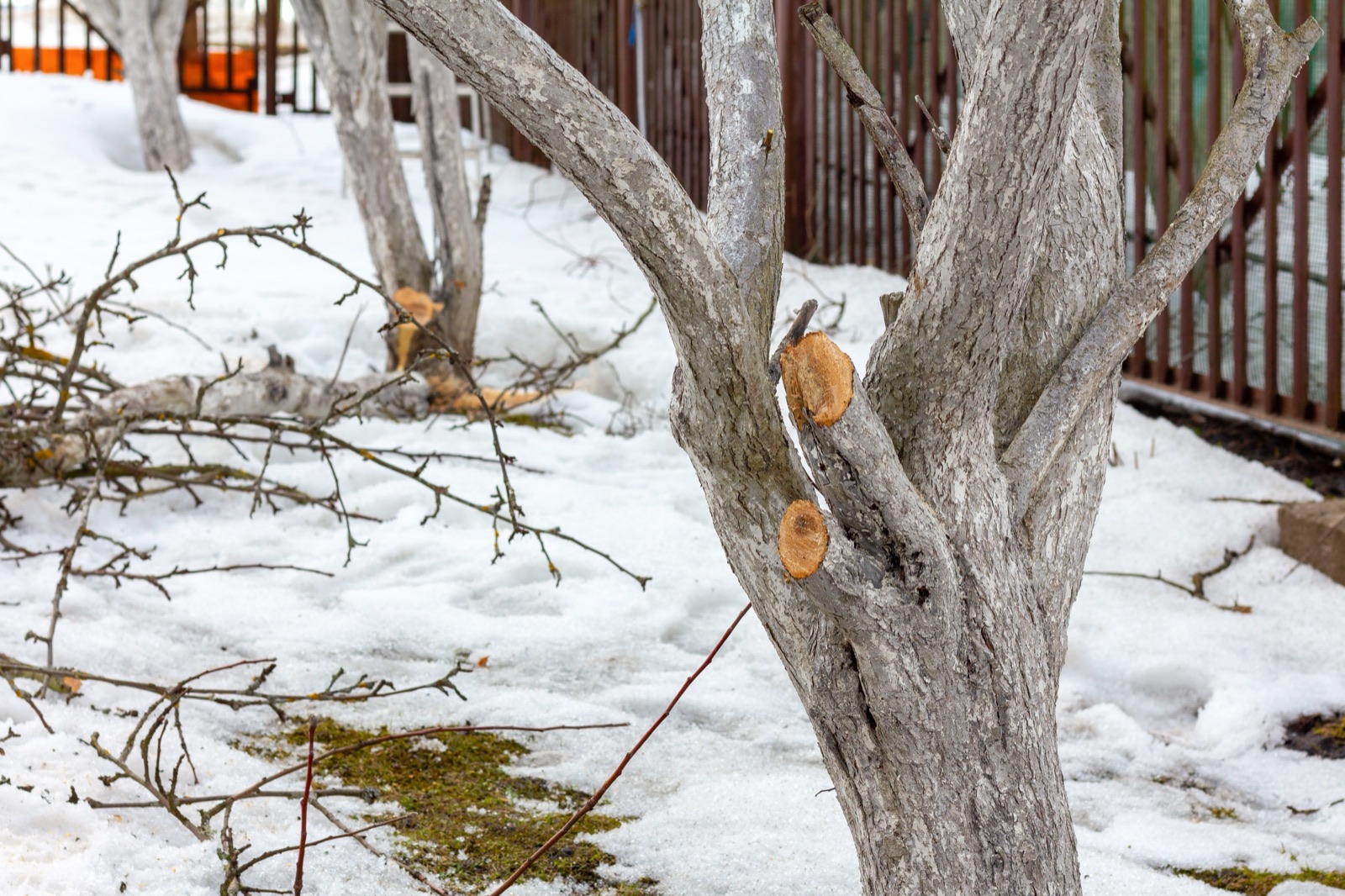
How to Handle Broken Branches and Winter Storm Damage
Winter storms can bring heavy snow, ice, and wind, often leaving behind broken limbs and damaged trees. Knowing how to respond quickly helps minimize long-term harm.
After a storm, inspect your property carefully. Remove smaller broken branches using clean tools, cutting back to a healthy lateral branch or bud. Avoid tearing bark or leaving jagged edges, as these can invite pests or disease.
For major damage, such as split trunks or large hanging limbs, contact a professional arborist. Attempting to remove heavy or unstable branches on your own can be dangerous. Experts trained in pruning in January and emergency tree care can safely assess whether a damaged tree can be saved through corrective pruning or if removal is necessary.
It’s also helpful to clear away any debris that may have accumulated around the base of trees after storms. Excess snow or fallen branches can block airflow and put extra weight on the root zone.
Post-Pruning Care for Trees in Winter
Once you’ve finished pruning, your trees still need a bit of attention to recover and stay protected through the rest of the season. Begin by applying a layer of mulch around the base, two to four inches deep, to insulate roots and help maintain consistent soil moisture. Be sure to keep mulch a few inches away from the trunk to prevent rot.
Here are some key steps to support your trees after winter pruning:
- Mulch properly: Spread 2–4 inches of organic mulch around the base to insulate roots and regulate soil temperature.
- Water on mild days: When the ground isn’t frozen, provide a deep soak to prevent dehydration and support root recovery.
- Inspect for stress: Look for cracking bark, leaning limbs, or frost damage and address issues early to prevent further harm.
- Clear debris: Remove fallen branches, snow, and leaves around the root zone to promote airflow and prevent rot.
- Monitor for pests or disease: Watch for fungal growth or insect activity as temperatures fluctuate. Early detection is key.
- Schedule a professional checkup: Have a certified arborist evaluate your trees for hidden signs of weakness or disease.
Post-pruning care not only helps your trees recover but also sets the stage for strong, healthy growth in spring. Consistent attention and preventive maintenance can save you from costly repairs down the line while keeping your landscape looking its best year-round.
Book Your Winter Pruning Appointment Now
Proper pruning is one of the most effective ways to maintain strong, safe, and beautiful trees, and winter is the perfect time to do it. Whether you’re managing a few ornamental trees or an entire landscape, professional care ensures your property stays protected from seasonal challenges.
At Lopez Tree Service, our certified arborists specialize in winter tree pruning and maintenance. We use safe, proven techniques to enhance your trees’ health and appearance while preventing potential hazards caused by heavy snow or ice.
Schedule your winter pruning appointment and prepare your trees for a vibrant, healthy spring. Contact us today to book your inspection or request a free quote. Give your trees the professional care they need to thrive year after year.

